
An AI Management System That Actually Works: Building the Operating Model
A practical blueprint for an AI management system, from its scope and decision rights to controlled evidence, management reviews and continuous improvement.
Older snapshot — new data available after next cron refresh.
Indicative, from main CPV
2,110 coded · 81 unclassified
By OCDS release tag
Counts are notices, not contracts.
Seven rolling 24h windows · UTC
Left: earliest · right: most recent publication interval
Ranked by published notices
Window: 12 Nov 2026–19 Nov 2026 · Updated 28 Nov, 12:15 UTC
A practical blueprint for an AI management system, from its scope and decision rights to controlled evidence, management reviews and continuous improvement.

Introduction The National Health Service (NHS) is a cornerstone of the United Kingdom’s public sector, providing healthcare services to millions. As the NHS…

Data has become a cornerstone in almost every sector, and public procurement is no exception. In the UK, public procurement is heavily regulated,…
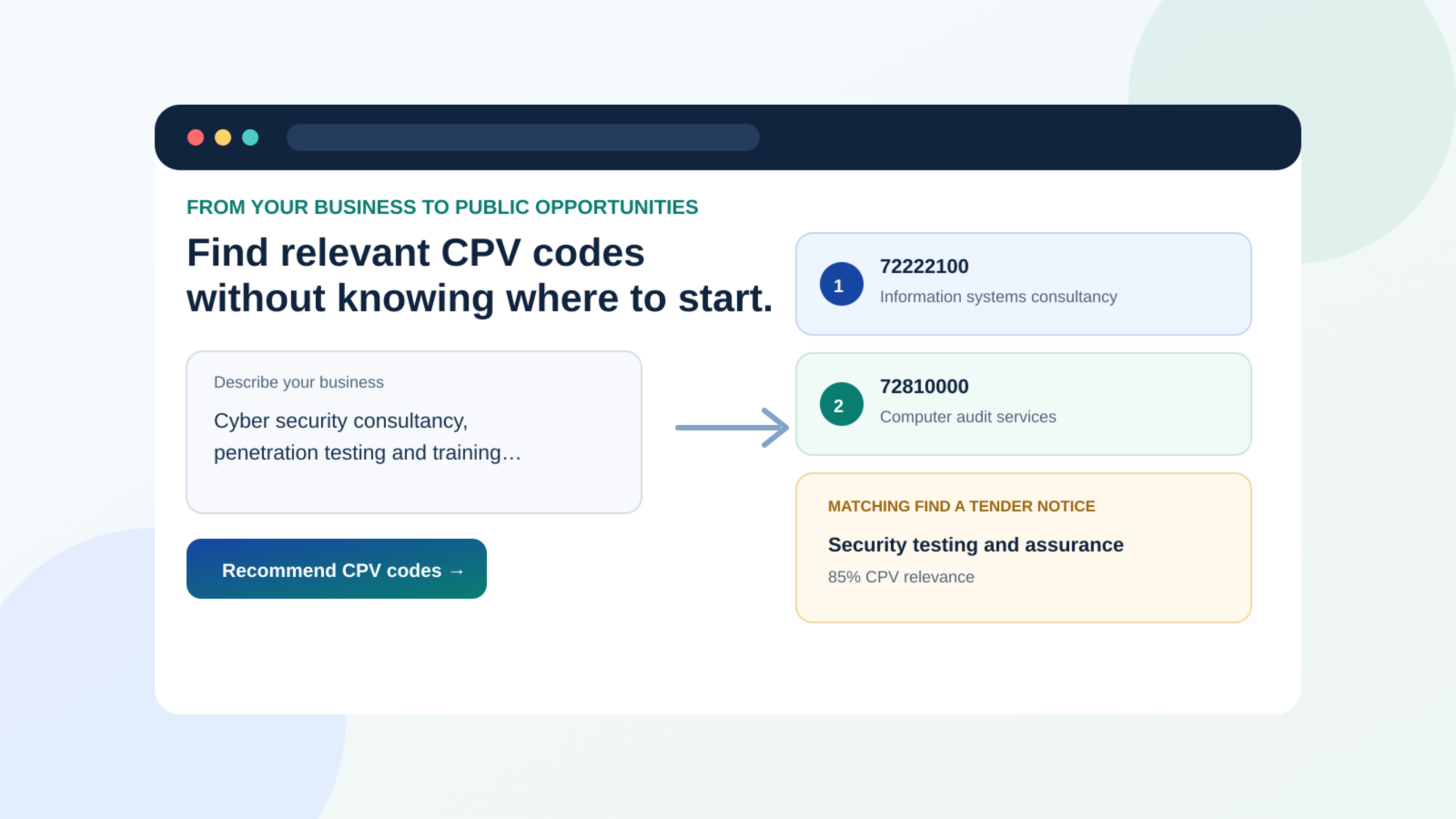
The UK public sector represents one of the country’s largest commercial markets, yet it is often presented to suppliers through classifications, notice structures…

As the UK healthcare sector strives to reduce its environmental impact, sustainable procurement is emerging as a key area of focus. By making…

Artificial intelligence (AI) is transforming various aspects of society, from medical advancements to climate change mitigation. The UK government’s recent white paper, “Artificial…

AI security is not simply a password and a vendor contract. Public organisations need controls for untrusted content, data exposure, connected tools and…

In the public sector, managing purchase order data is a critical task. With numerous descriptions, suppliers, and item codes, maintaining accuracy and consistency…

Blade Runner, directed by Ridley Scott and released in 1982, is a film that has transcended its own medium to leave an…
Artificial intelligence is transforming how organisations operate, but deploying AI successfully requires more than selecting a model or building an application. Businesses must also address AI governance, information security, data protection, regulatory compliance, operational risk and long-term accountability.
View the book