
The importance of data in the procurement industry
This article originally appeared on NOECPC website linked here Data is critical for achieving the best possible outcomes in procurement negotiations and supplier…
Indicative, from main CPV
2,110 coded · 81 unclassified
By OCDS release tag
Counts are notices, not contracts.
Seven rolling 24h windows · UTC
Left: earliest · right: most recent publication interval
Ranked by published notices
Window: 12 Nov 2026–19 Nov 2026 · Updated 28 Nov, 12:15 UTC
This article originally appeared on NOECPC website linked here Data is critical for achieving the best possible outcomes in procurement negotiations and supplier…

The Fuzzy Lookup Add-In for Excel performs fuzzy matching of textual data in Excel. Its a free excel plugin and is available to…

Financial markets rarely get into serious trouble because of one isolated event. More often, problems emerge when several pressures begin developing at the…

1. Introduction This report provides a comprehensive, data-driven analysis of the National Health Service (NHS) in England, examining its current operational performance, workforce…

Public-sector AI fairness requires more than a bias test. It must account for unequal data, accessibility, service design and the lived experience of…
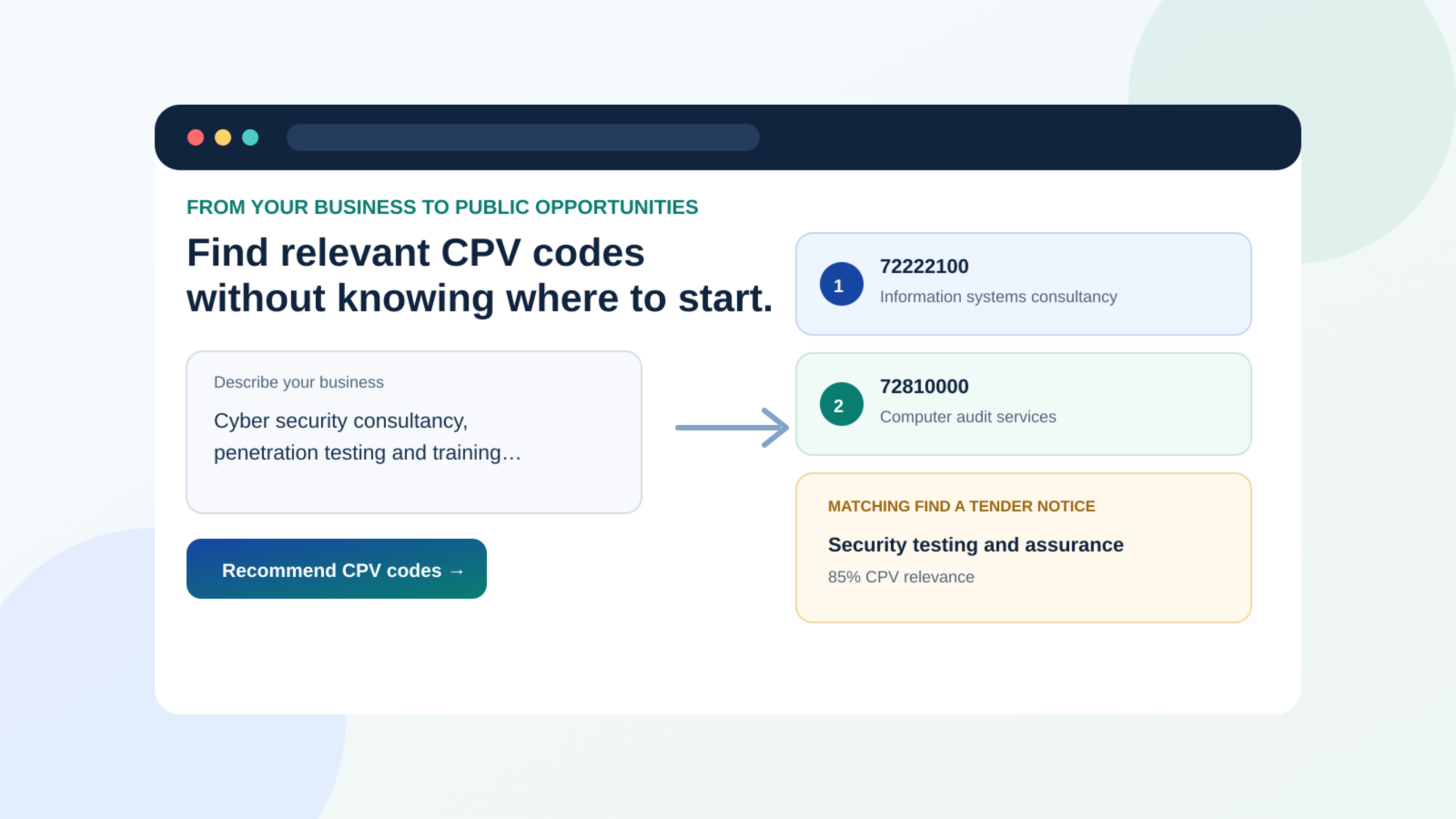
The UK public sector represents one of the country’s largest commercial markets, yet it is often presented to suppliers through classifications, notice structures…

A practical blueprint for an AI management system, from its scope and decision rights to controlled evidence, management reviews and continuous improvement.

In the rapidly evolving landscape of data analysis and management, Artificial Intelligence (AI) chatbots have carved a niche for themselves. These chatbots, equipped…

Public-sector AI needs to demonstrate real outcomes—not merely faster outputs. A strong assurance approach tracks quality, fairness, cost, staff experience and sustainability.
Artificial intelligence is transforming how organisations operate, but deploying AI successfully requires more than selecting a model or building an application. Businesses must also address AI governance, information security, data protection, regulatory compliance, operational risk and long-term accountability.
View the book