
Not All AI Is High Risk: Designing a Defensible Risk-Tiering Method
A practical method for classifying AI use cases by their real-world impact, with example tiers, escalation triggers and a worked public-service scenario.
Indicative, from main CPV
2,110 coded · 81 unclassified
By OCDS release tag
Counts are notices, not contracts.
Seven rolling 24h windows · UTC
Left: earliest · right: most recent publication interval
Ranked by published notices
Window: 12 Nov 2026–19 Nov 2026 · Updated 28 Nov, 12:15 UTC
A practical method for classifying AI use cases by their real-world impact, with example tiers, escalation triggers and a worked public-service scenario.

Seven usable governance records and the fields each should contain, designed for public bodies that need control without creating a new bureaucracy.

In today’s rapidly evolving healthcare landscape, Information Management and Technology (IM&T) plays a critical role in ensuring the efficient and effective delivery of…
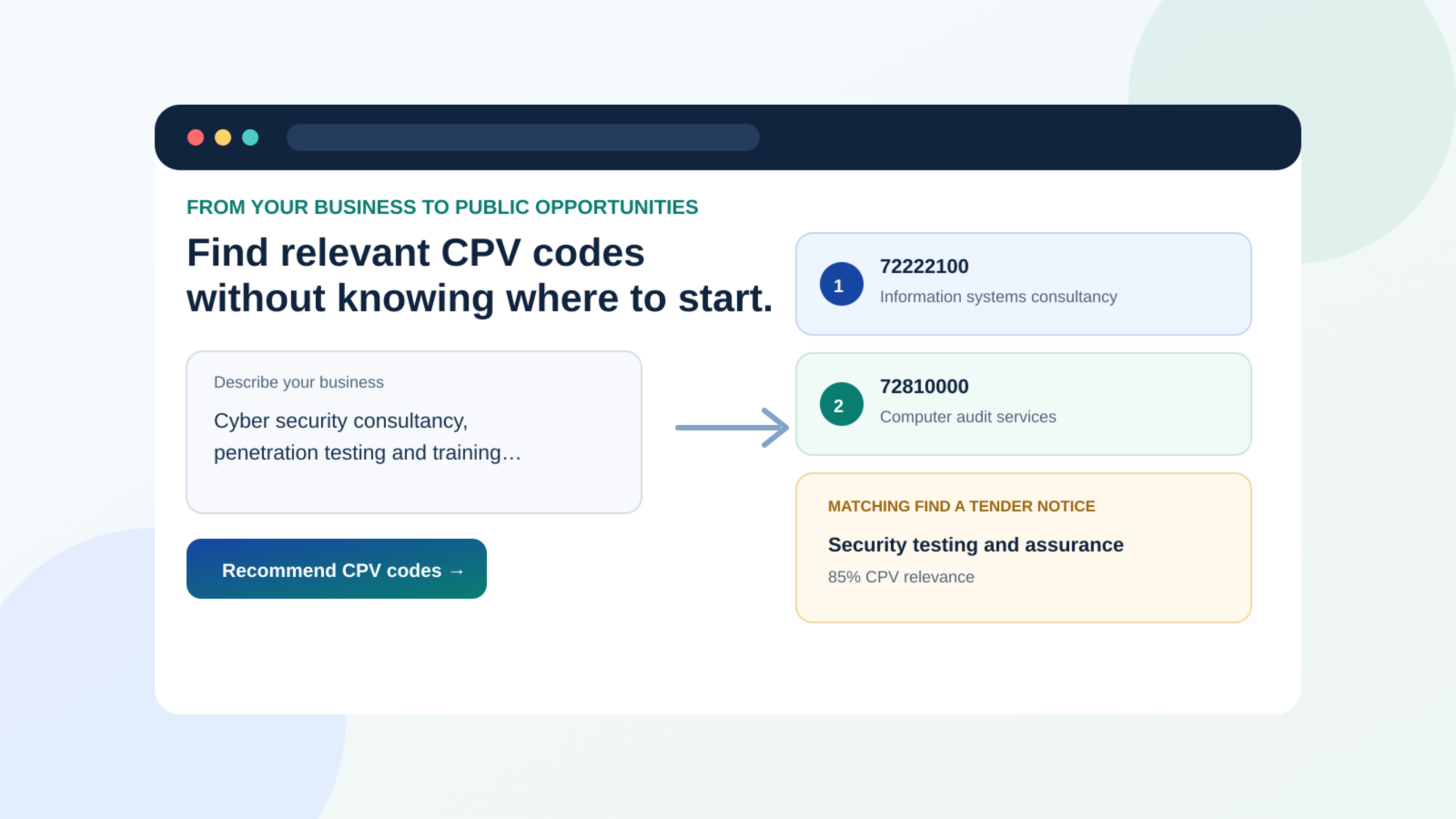
The UK public sector represents one of the country’s largest commercial markets, yet it is often presented to suppliers through classifications, notice structures…

Power BI is a versatile business analytics tool that can be used for process mining when combined with event logs and process mapping…

This article analyses the key findings from the Institute for Government report titled Improving Accountability in Government Procurement, which explores the size and…

Financial markets rarely get into serious trouble because of one isolated event. More often, problems emerge when several pressures begin developing at the…

In today’s data-driven business landscape, organisations are flooded with more data than ever before. From transaction histories to customer behaviour patterns, data can…

In the era of big data, organisations are increasingly reliant on spend analytics to make informed decisions and drive efficiencies. Spend analytics involves…
Artificial intelligence is transforming how organisations operate, but deploying AI successfully requires more than selecting a model or building an application. Businesses must also address AI governance, information security, data protection, regulatory compliance, operational risk and long-term accountability.
View the book