
Show Your Working: Algorithmic Transparency That Citizens Can Actually Use
The Algorithmic Transparency Recording Standard is more than a publication form. Used well, it helps people understand why an algorithm is there and…
Indicative, from main CPV
2,110 coded · 81 unclassified
By OCDS release tag
Counts are notices, not contracts.
Seven rolling 24h windows · UTC
Left: earliest · right: most recent publication interval
Ranked by published notices
Window: 12 Nov 2026–19 Nov 2026 · Updated 28 Nov, 12:15 UTC
The Algorithmic Transparency Recording Standard is more than a publication form. Used well, it helps people understand why an algorithm is there and…

Public-sector AI fairness requires more than a bias test. It must account for unequal data, accessibility, service design and the lived experience of…

A practical method for classifying AI use cases by their real-world impact, with example tiers, escalation triggers and a worked public-service scenario.

The National Health Service (NHS) stands as a testament to the power of public health. Its scale and reach mean it deals with…

Artificial intelligence (AI) is transforming various aspects of society, from medical advancements to climate change mitigation. The UK government’s recent white paper, “Artificial…
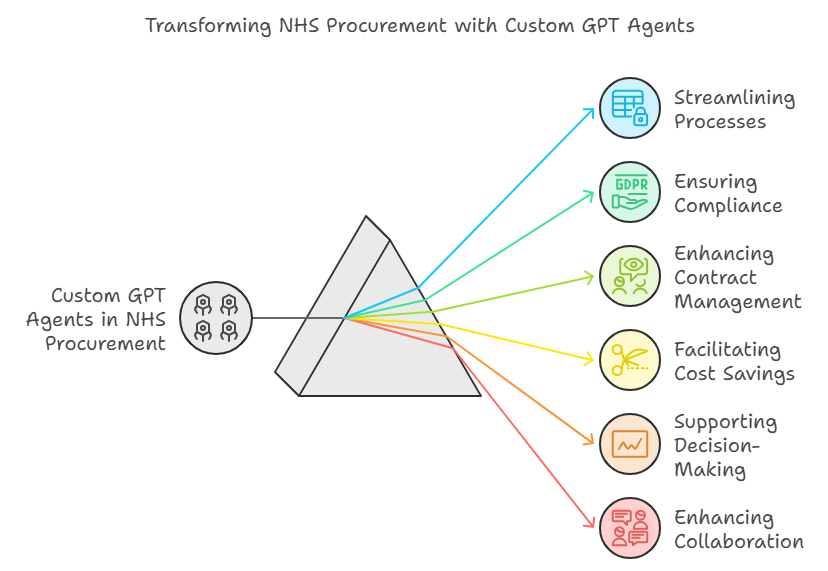
The healthcare sector, particularly the National Health Service (NHS) in the United Kingdom, operates within a complex procurement environment driven by rigorous compliance…

In the rapidly evolving world of artificial intelligence, the tools at our fingertips are nothing short of revolutionary. ChatGPT, among others, has democratized…

Public-sector AI needs to demonstrate real outcomes—not merely faster outputs. A strong assurance approach tracks quality, fairness, cost, staff experience and sustainability.

As the UK healthcare sector strives to reduce its environmental impact, sustainable procurement is emerging as a key area of focus. By making…
Artificial intelligence is transforming how organisations operate, but deploying AI successfully requires more than selecting a model or building an application. Businesses must also address AI governance, information security, data protection, regulatory compliance, operational risk and long-term accountability.
View the book