
An AI Management System That Actually Works: Building the Operating Model
A practical blueprint for an AI management system, from its scope and decision rights to controlled evidence, management reviews and continuous improvement.
Indicative, from main CPV
2,110 coded · 81 unclassified
By OCDS release tag
Counts are notices, not contracts.
Seven rolling 24h windows · UTC
Left: earliest · right: most recent publication interval
Ranked by published notices
Window: 12 Nov 2026–19 Nov 2026 · Updated 28 Nov, 12:15 UTC
A practical blueprint for an AI management system, from its scope and decision rights to controlled evidence, management reviews and continuous improvement.

High blood pressure affects millions of people across the UK, but for some, it is a symptom of an underlying hormonal condition that…

Blade Runner, directed by Ridley Scott and released in 1982, is a film that has transcended its own medium to leave an…

In today’s rapidly evolving healthcare landscape, Information Management and Technology (IM&T) plays a critical role in ensuring the efficient and effective delivery of…

Turn publicly available procurement data into interactive dashboards, explore public sector spending activity, and track individual buyers — directly from your website. Public…
After a bit of tweaking and reading GPT API documentation I have created a simple process to integrate GPT into live analysis of…

Explore how the UK public and NHS staff view digital technology and AI in healthcare, including trust, safety concerns and the role of…

Public-sector AI fairness requires more than a bias test. It must account for unequal data, accessibility, service design and the lived experience of…
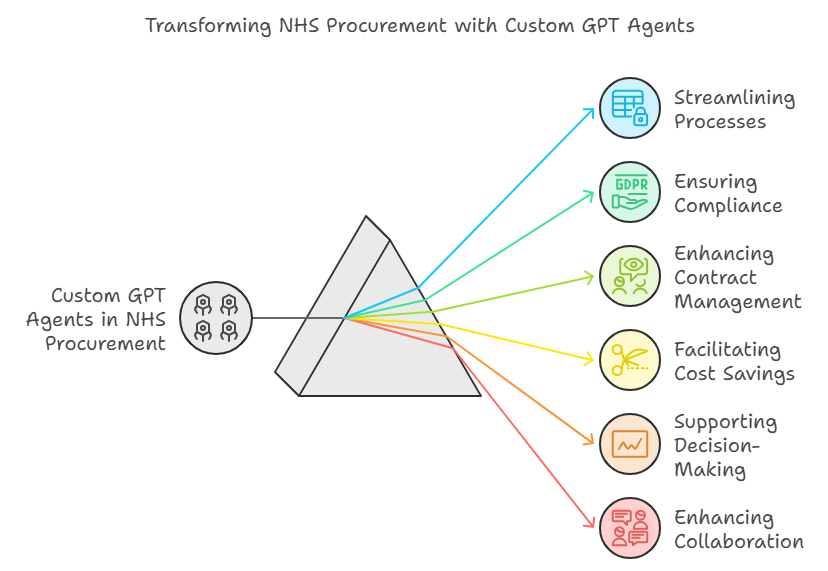
The healthcare sector, particularly the National Health Service (NHS) in the United Kingdom, operates within a complex procurement environment driven by rigorous compliance…
Artificial intelligence is transforming how organisations operate, but deploying AI successfully requires more than selecting a model or building an application. Businesses must also address AI governance, information security, data protection, regulatory compliance, operational risk and long-term accountability.
View the book