
Show Your Working: Algorithmic Transparency That Citizens Can Actually Use
The Algorithmic Transparency Recording Standard is more than a publication form. Used well, it helps people understand why an algorithm is there and…
Indicative, from main CPV
2,110 coded · 81 unclassified
By OCDS release tag
Counts are notices, not contracts.
Seven rolling 24h windows · UTC
Left: earliest · right: most recent publication interval
Ranked by published notices
Window: 12 Nov 2026–19 Nov 2026 · Updated 28 Nov, 12:15 UTC
The Algorithmic Transparency Recording Standard is more than a publication form. Used well, it helps people understand why an algorithm is there and…

ISO/IEC 42001 can give public bodies structure, ownership and review routines for AI—but certification does not make a particular model automatically lawful or…

As health data professionals, we face a unique set of challenges. Not only must we manage a sea of complex and sensitive data,…

Power BI is a versatile business analytics tool that can be used for process mining when combined with event logs and process mapping…

The role of data in procurement has become increasingly important in recent years, as companies seek to optimize their supply chain and reduce…
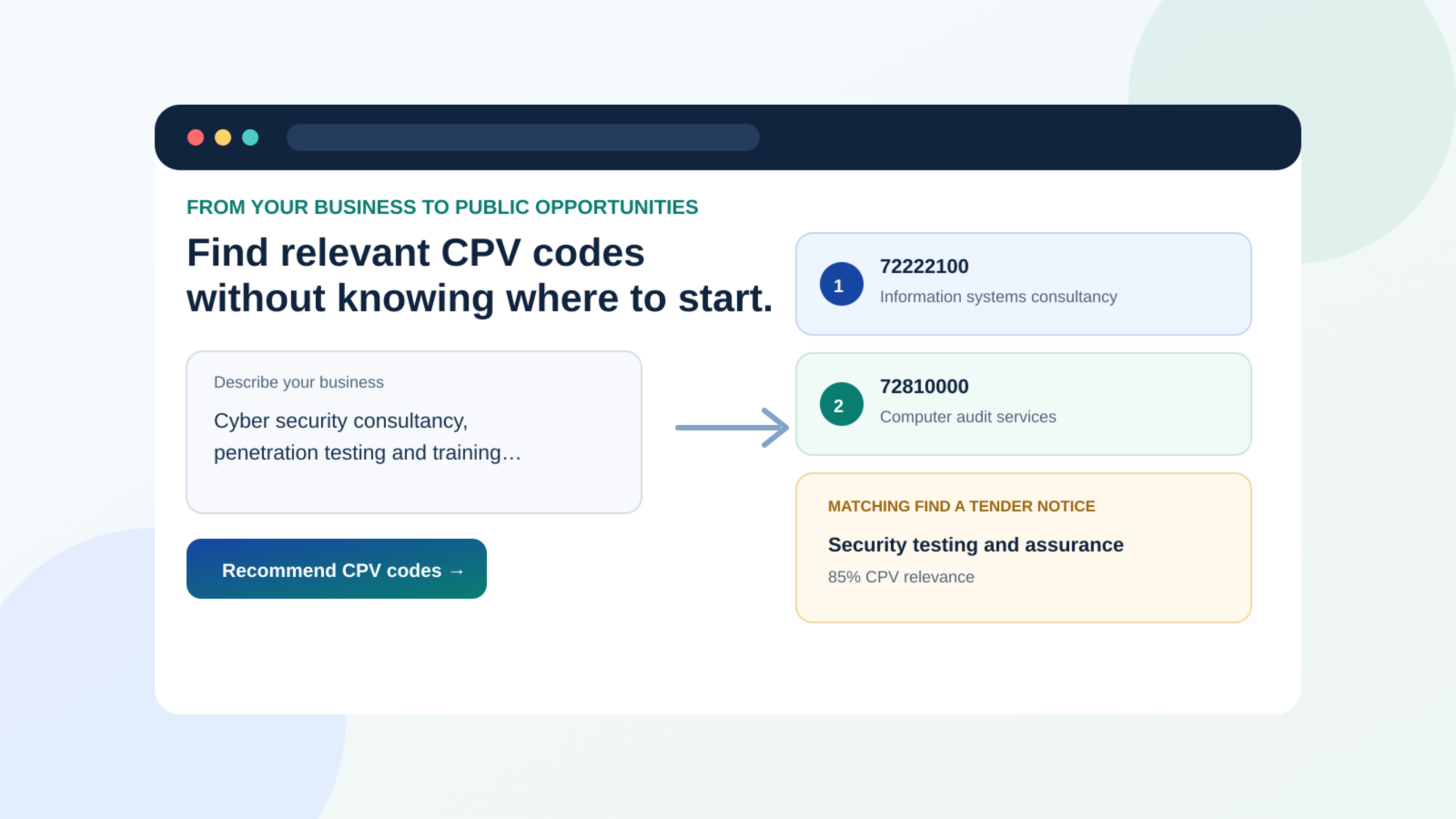
The UK public sector represents one of the country’s largest commercial markets, yet it is often presented to suppliers through classifications, notice structures…

Artificial intelligence is changing the way organisations work, particularly in procurement, where it has the potential to simplify complex tasks, improve access to…

Human in the loop AI is going to be the difference between “useful assistant” and “future PACAC inquiry exhibit”. Under the Procurement Act…

An AI assistant can improve public-service access, but confident wrong answers, accessibility gaps and unclear escalation routes can quickly undermine that promise.
Artificial intelligence is transforming how organisations operate, but deploying AI successfully requires more than selecting a model or building an application. Businesses must also address AI governance, information security, data protection, regulatory compliance, operational risk and long-term accountability.
View the book