
An AI Management System That Actually Works: Building the Operating Model
A practical blueprint for an AI management system, from its scope and decision rights to controlled evidence, management reviews and continuous improvement.
Indicative, from main CPV
2,110 coded · 81 unclassified
By OCDS release tag
Counts are notices, not contracts.
Seven rolling 24h windows · UTC
Left: earliest · right: most recent publication interval
Ranked by published notices
Window: 12 Nov 2026–19 Nov 2026 · Updated 28 Nov, 12:15 UTC
A practical blueprint for an AI management system, from its scope and decision rights to controlled evidence, management reviews and continuous improvement.
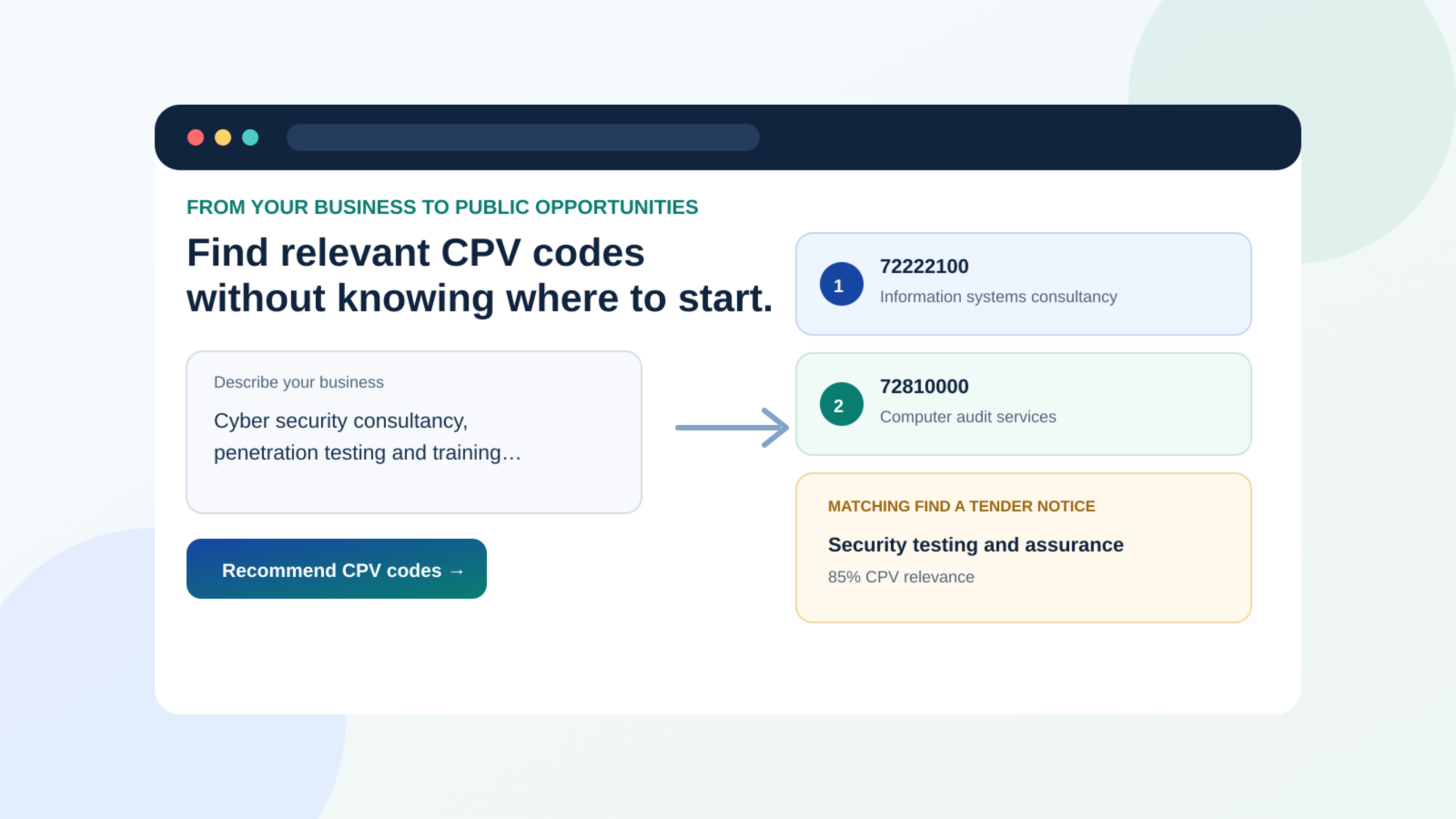
The UK public sector represents one of the country’s largest commercial markets, yet it is often presented to suppliers through classifications, notice structures…

This post was originally posted on NOECPC website linked here. NOE CPC has been using technology and data to improve patient care for…

Data entry errors have long been a major concern in the procurement industry, leading to inefficiencies, delays, and additional costs. However, the implementation…

Artificial intelligence (AI) is transforming various aspects of society, from medical advancements to climate change mitigation. The UK government’s recent white paper, “Artificial…

As health data professionals, we face a unique set of challenges. Not only must we manage a sea of complex and sensitive data,…

In the rapidly evolving world of artificial intelligence, the tools at our fingertips are nothing short of revolutionary. ChatGPT, among others, has democratized…

A technical operating guide for managing live AI systems, including logging, release control, model drift, incident response, rollback and safe retirement.

Since its inception in 2009, Bitcoin has defied all odds, transforming from an obscure digital currency to a dominant force in the global…
Artificial intelligence is transforming how organisations operate, but deploying AI successfully requires more than selecting a model or building an application. Businesses must also address AI governance, information security, data protection, regulatory compliance, operational risk and long-term accountability.
View the book