
AI-Assisted Discharge Summary (AI-Assisted DSUM)
The AI-Assisted Discharge Summary (AI-Assisted DSUM) is a technological innovation aimed at improving the efficiency of hospital discharge summaries within the NHS. Using…
Indicative, from main CPV
2,110 coded · 81 unclassified
By OCDS release tag
Counts are notices, not contracts.
Seven rolling 24h windows · UTC
Left: earliest · right: most recent publication interval
Ranked by published notices
Window: 12 Nov 2026–19 Nov 2026 · Updated 28 Nov, 12:15 UTC
The AI-Assisted Discharge Summary (AI-Assisted DSUM) is a technological innovation aimed at improving the efficiency of hospital discharge summaries within the NHS. Using…

Artificial intelligence is changing the way organisations work, particularly in procurement, where it has the potential to simplify complex tasks, improve access to…

Process mining has become a transformative technology for analysing and improving operational processes across various sectors, including procurement and supply chain management. In…

In the public sector, managing purchase order data is a critical task. With numerous descriptions, suppliers, and item codes, maintaining accuracy and consistency…

AI use across NHS organisations is likely to be more widespread than many leaders realise. Staff are already experimenting with tools that can…

As health data professionals, we face a unique set of challenges. Not only must we manage a sea of complex and sensitive data,…

A practical blueprint for an AI management system, from its scope and decision rights to controlled evidence, management reviews and continuous improvement.
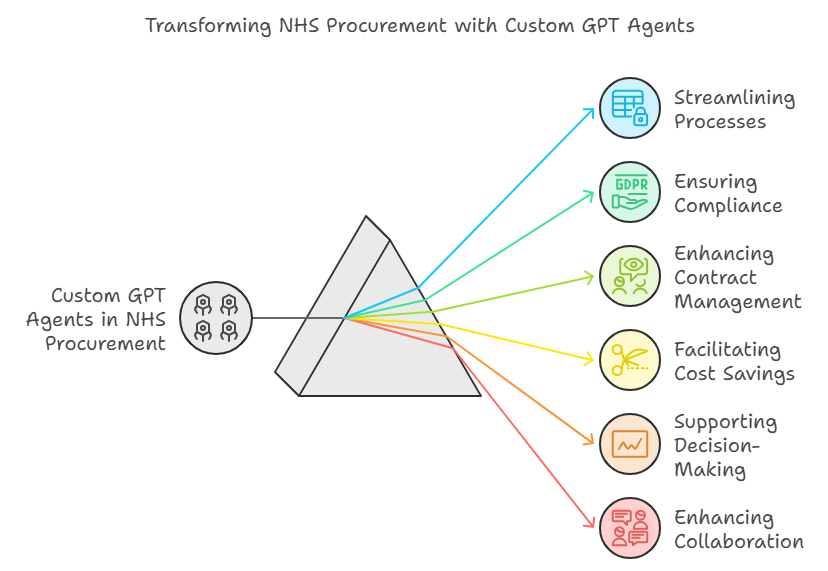
The healthcare sector, particularly the National Health Service (NHS) in the United Kingdom, operates within a complex procurement environment driven by rigorous compliance…

Human in the loop AI is going to be the difference between “useful assistant” and “future PACAC inquiry exhibit”. Under the Procurement Act…
Artificial intelligence is transforming how organisations operate, but deploying AI successfully requires more than selecting a model or building an application. Businesses must also address AI governance, information security, data protection, regulatory compliance, operational risk and long-term accountability.
View the book