
A Fair Algorithm Is Not Enough: Equality, Access and the People Missing from the Data
Public-sector AI fairness requires more than a bias test. It must account for unequal data, accessibility, service design and the lived experience of…
Indicative, from main CPV
2,110 coded · 81 unclassified
By OCDS release tag
Counts are notices, not contracts.
Seven rolling 24h windows · UTC
Left: earliest · right: most recent publication interval
Ranked by published notices
Window: 12 Nov 2026–19 Nov 2026 · Updated 28 Nov, 12:15 UTC
Public-sector AI fairness requires more than a bias test. It must account for unequal data, accessibility, service design and the lived experience of…

Introduction: The Challenge of Funding A&E Services Accident and Emergency (A&E) departments in the NHS are under constant pressure. Every year, millions of…

In the public sector, managing purchase order data is a critical task. With numerous descriptions, suppliers, and item codes, maintaining accuracy and consistency…

Human-in-the-loop governance fails when staff cannot question, override or explain AI advice. Here is what meaningful oversight looks like in a public service.
After a bit of tweaking and reading GPT API documentation I have created a simple process to integrate GPT into live analysis of…
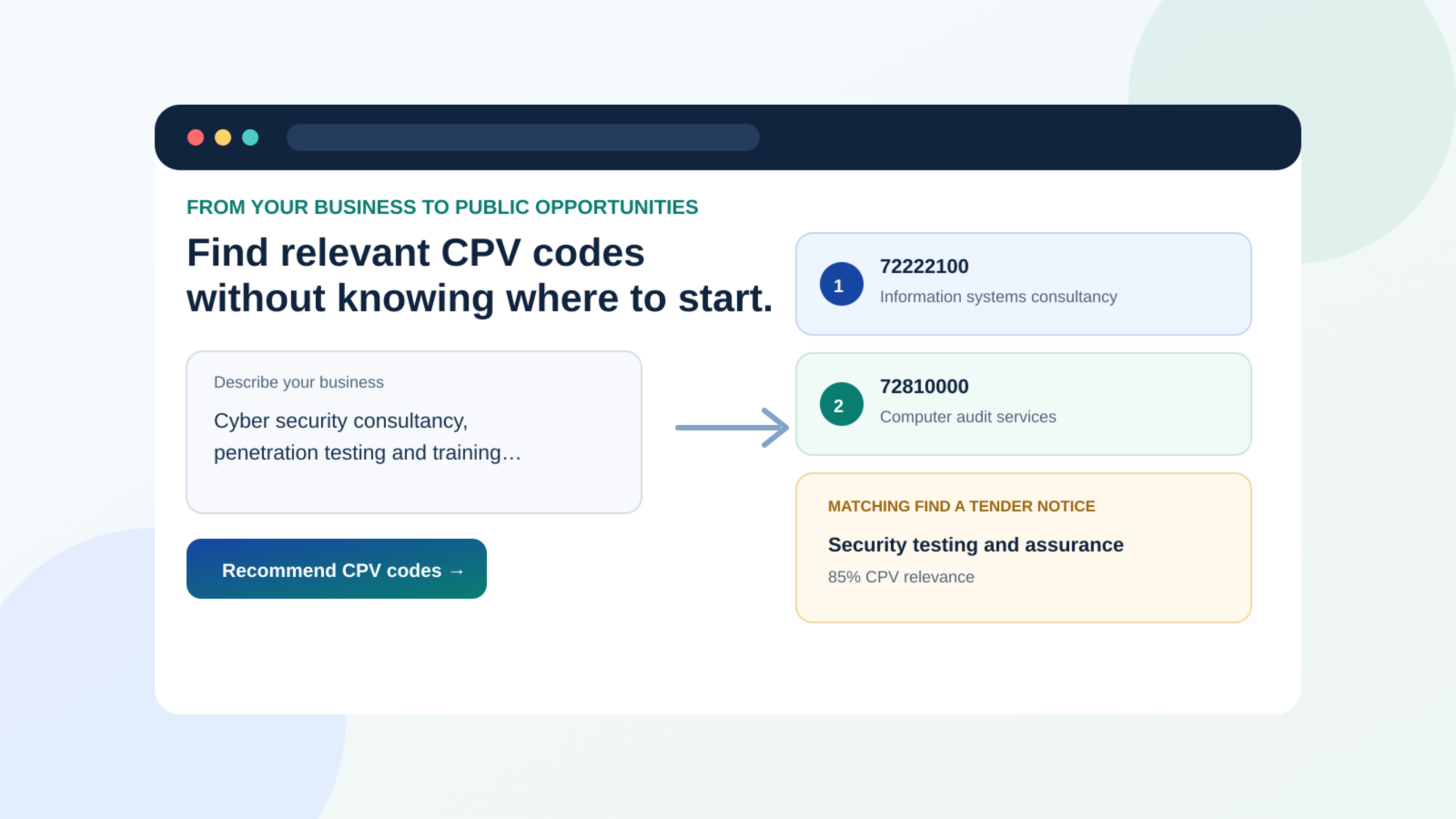
The UK public sector represents one of the country’s largest commercial markets, yet it is often presented to suppliers through classifications, notice structures…

Customer Relationship Management (CRM) tools have become indispensable for businesses in today’s competitive landscape. By streamlining interactions with customers, suppliers, and internal teams,…

Artificial intelligence is quickly becoming part of the conversation in almost every workplace. In procurement and the public sector, it is increasingly positioned…

Power BI is a versatile business analytics tool that can be used for process mining when combined with event logs and process mapping…
Artificial intelligence is transforming how organisations operate, but deploying AI successfully requires more than selecting a model or building an application. Businesses must also address AI governance, information security, data protection, regulatory compliance, operational risk and long-term accountability.
View the book