
An AI Management System That Actually Works: Building the Operating Model
A practical blueprint for an AI management system, from its scope and decision rights to controlled evidence, management reviews and continuous improvement.
Indicative, from main CPV
2,110 coded · 81 unclassified
By OCDS release tag
Counts are notices, not contracts.
Seven rolling 24h windows · UTC
Left: earliest · right: most recent publication interval
Ranked by published notices
Window: 12 Nov 2026–19 Nov 2026 · Updated 28 Nov, 12:15 UTC
A practical blueprint for an AI management system, from its scope and decision rights to controlled evidence, management reviews and continuous improvement.

In the rapidly evolving landscape of data analysis and management, Artificial Intelligence (AI) chatbots have carved a niche for themselves. These chatbots, equipped…

This article originally appeared on NOECPC website linked here Data is critical for achieving the best possible outcomes in procurement negotiations and supplier…

I’ve been experimenting with a small web game recently, although calling it a game is perhaps stretching the definition a little because there…
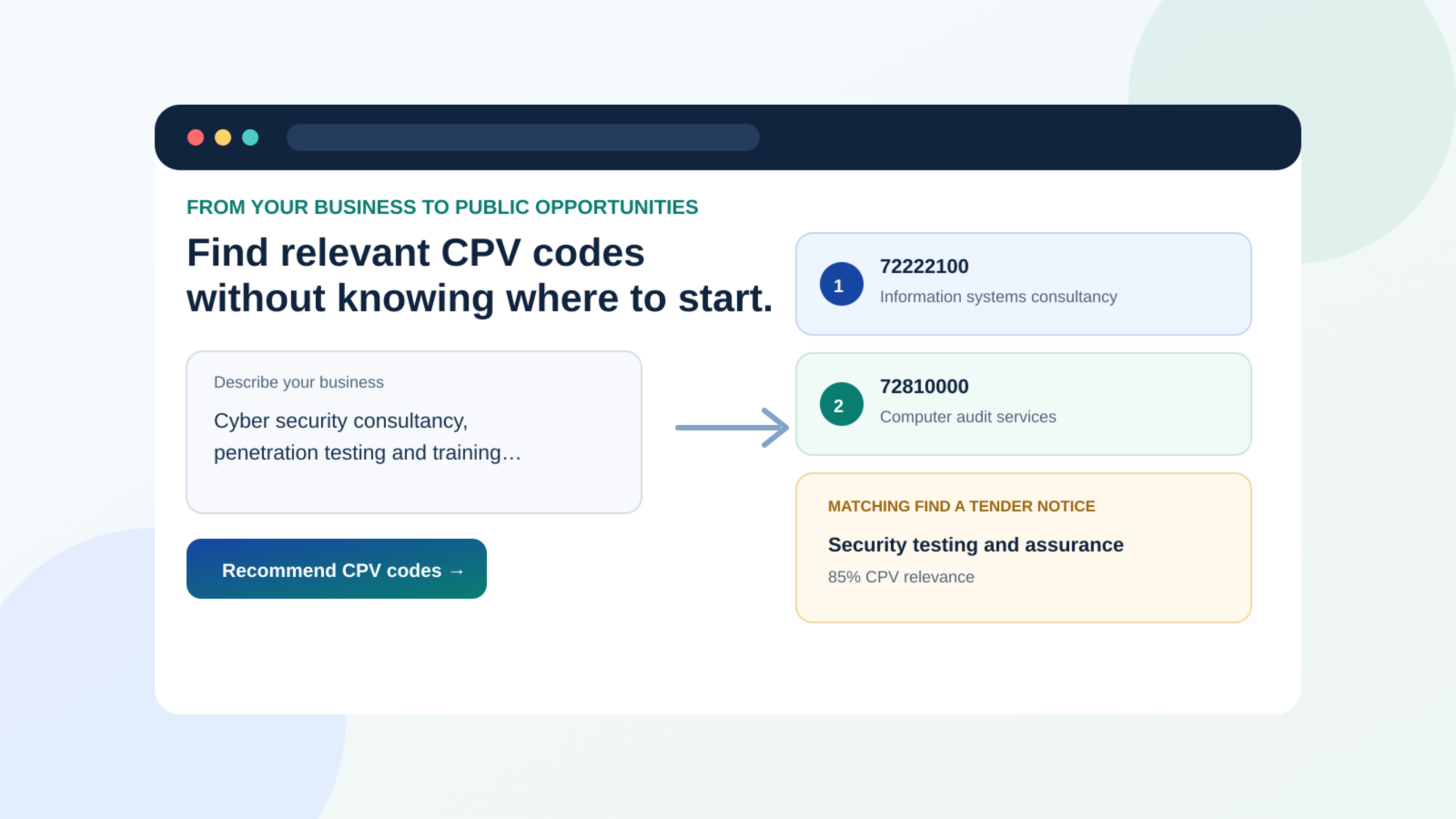
The UK public sector represents one of the country’s largest commercial markets, yet it is often presented to suppliers through classifications, notice structures…

Data entry errors have long been a major concern in the procurement industry, leading to inefficiencies, delays, and additional costs. However, the implementation…

The AI-Assisted Discharge Summary (AI-Assisted DSUM) is a technological innovation aimed at improving the efficiency of hospital discharge summaries within the NHS. Using…

An AI assistant can improve public-service access, but confident wrong answers, accessibility gaps and unclear escalation routes can quickly undermine that promise.

In the rapidly evolving world of artificial intelligence, the tools at our fingertips are nothing short of revolutionary. ChatGPT, among others, has democratized…
Artificial intelligence is transforming how organisations operate, but deploying AI successfully requires more than selecting a model or building an application. Businesses must also address AI governance, information security, data protection, regulatory compliance, operational risk and long-term accountability.
View the book